
Would your organization stand up to a targeted HCC audit? Survey says… probably not. We can help.


By Jason Jobes
We recently hosted a webinar on HCC compliance. A very hot topic. Nearly 300 registrants signed up.
We were supposed to go 30 minutes … but stayed for almost 45 due to a number of fantastic questions and insights from the audience that just kept coming. If you attended and/or submitted one of those questions, thank you. Your input makes these programs better.
HCC coding compliance and risk adjustment accuracy are red-hot right now. Over $750M in recommended recoupments or settlements were announced across a 45-day span in August and September. The theme is the same—risk adjustable diagnoses were submitted without sufficient documentation.
Our webinar proved it. I wanted to share two important takeaways with you today:
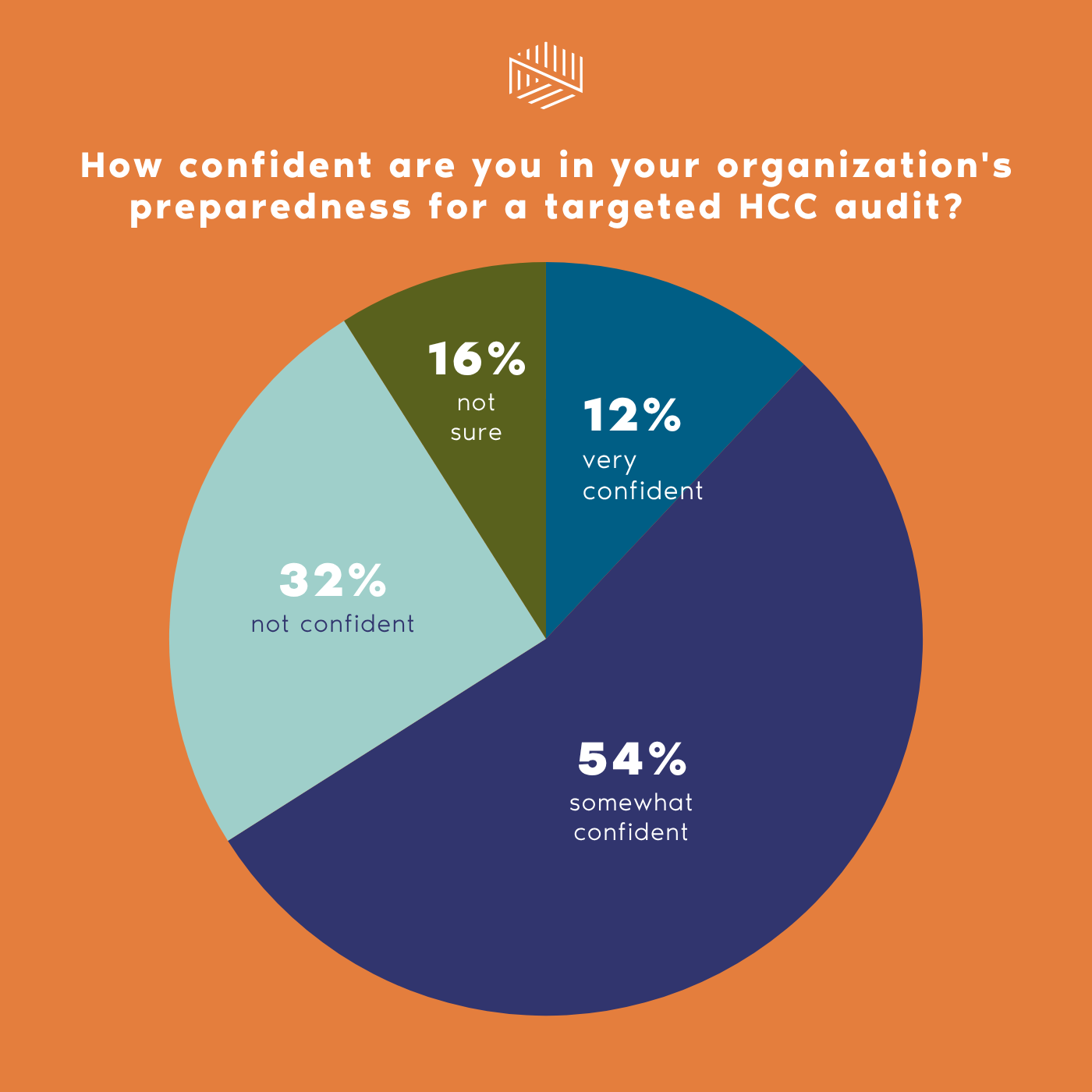
- Most organizations are not prepared for a targeted OIG audit. We asked this question of the audience in a live poll during the show. The results speak for themselves.
Random audits serve a purpose, but as a single strategy they don’t cut it anymore.
TARGETED audits ensure your revenue accuracy. You must evaluate your coded data and audit the same vulnerabilities that the OIG and other auditors are hitting.
2. You can be different, but you must be defensible. Speaking of targeted audits the OIG isn’t pulling random charts from random hospitals. They are going after diagnoses and HCCs with high error rates, and hospitals/healthcare orgs whose data looks a lot different than their peers.
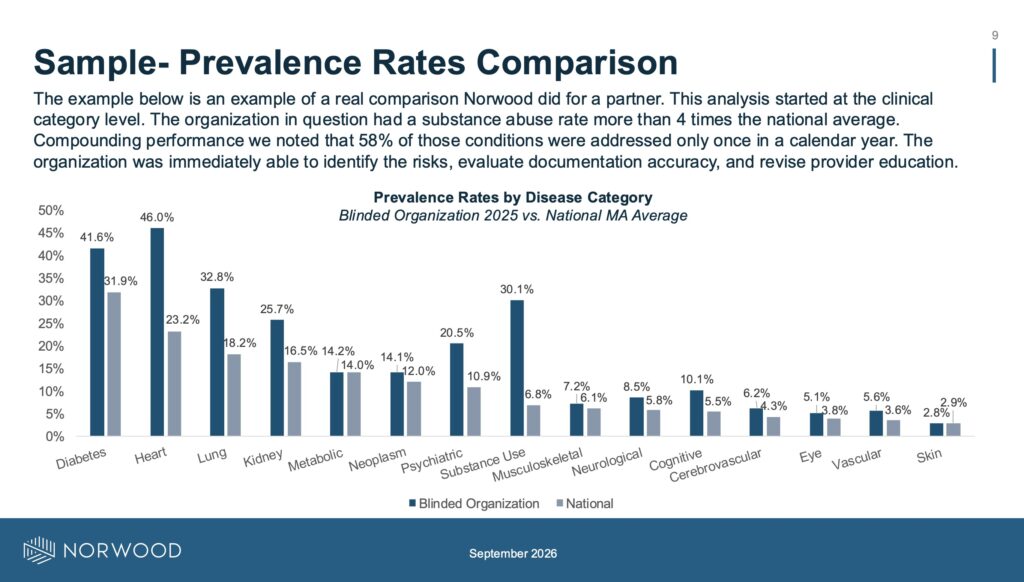
Here’s a slide I shared on the program. It’s an example of a real comparison Norwood did for a partner. This analysis started at the clinical category level. The organization in question had a substance abuse rate more than 4 times the national average. Compounding performance we noted that 58% of those conditions were addressed only once in a calendar year. The organization was immediately able to identify the risks, evaluate documentation accuracy, and revise provider education.
Screenshot
This might not seem fair at first glance. Maybe your organization sees a higher percentage of patients with substance abuse. Maybe you’ve trained your providers on specific terminology, or your CDI and coding staff on appropriate capture.
That’s all well and good (and compliant, if done right). But, it has to be defensible.
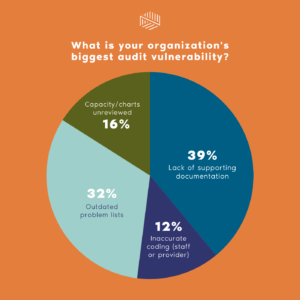
We also asked what organization’s biggest vulnerabilities were. The no. 1 answer? Lack of supporting documentation.
If you missed the webinar you can find the recording here.
If you need a partner for HCC code audits or to assess your OIG risk, we’re here to help.
Related News & Insights
Two authors talk shop on CDI, physician advisors … and heavy metal
Listen to the podcast here. Trey LaCharite has seen it all during his time as physician advisor….

Three new rules/regulations to watch, effective Oct. 1
By Brian Murphy Thursday, Oct. 1 is the start of three big changes hitting the mid-revenue…